The Myth of the Unstructured Classroom: Why Child-Led Learning Looks Chaotic to the Untrained Eye
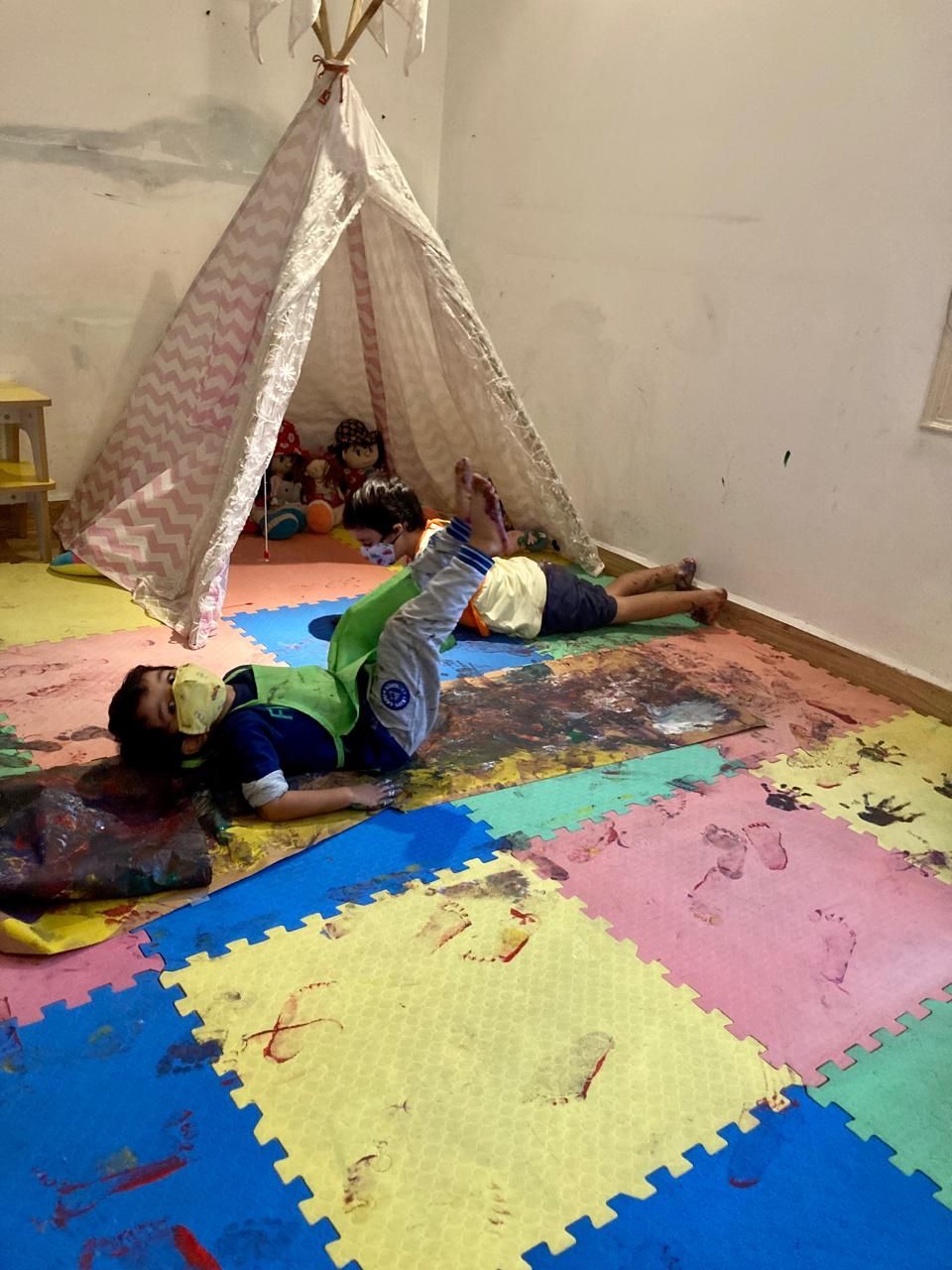
Walk into a truly child-led classroom, and you might feel unsettled. And when we feel uneasy, we often label things as negative. So, it’s not uncommon to hear phrases like:
- “This is an unstructured program.”
- “Isn’t this just a new fad where children do whatever they want?”
- “How will they ever be school-ready?”
But here’s the truth:
This is learning at its most organic, human, and essential level.
The Work You Can’t Measure on a Worksheet
In a child-led classroom, learning doesn’t only happen when things go
right.
It happens when things fall apart.
When the tower breaks.
When a friend says “no.”
When frustration bubbles over.
This is where true learning begins.
These moments aren’t interruptions to learning—they are the foundation of it.
In these moments, children need more than just academic guidance.
They need an adult who understands human development.
An adult who knows that emotions are not distractions—but the very building
blocks of learning.
An adult who brings calm, not control.
When we hold space for children—really hold space—we don’t
just let them explore what works.
We guide them through what doesn’t.
And this requires a different kind of adult.
- An adult who doesn’t hijack a child’s struggle to soothe their own discomfort.
- An adult who doesn’t mistake their need for control as “teaching.”
- An adult who doesn’t project their own inner child into the situation.
Is this easy? Absolutely not.
There are teachers. And there are
learning facilitators.
The path from traditional teaching to facilitation is not meant to be an easy
one.
Managing vs. Facilitating: The Real Difference
A classroom where children never struggle isn’t peaceful. It’s
managed.
A classroom where emotions are silenced isn’t respectful. It’s
convenient.
A classroom where the teacher does all the problem-solving isn’t preparing
children for life. It’s preparing them for compliance.
Managing: Putting Out Fires
Managing is rushing to calm down the room, enforcing “sharing,” or quieting big emotions so the classroom looks peaceful.
Facilitating: Teaching Them to Build Their Own Fire
Facilitating is teaching children how to build their own fire—so they can keep it burning without setting everything else ablaze. It means:
- Letting frustration be felt—without punishing it.
- Teaching conflict resolution—not forcing apologies.
- Holding firm boundaries—without breaking a child’s spirit.
Yes, this approach means the classroom may look messy.
Yes, it means emotions can run high.
Yes, it might not be picture-perfect.
But to the untrained eye, it looks like chaos.
To the trained eye, it’s children learning to be human.
The Role of the Learning Facilitator
The facilitator who understands this balance doesn’t control the room. They
hold space for growth.
Real learning isn’t about making childhood easier for adults. It’s about
preparing children for a world that won’t always follow a neatly structured
lesson plan.
And that kind of learning?
It’s loud.
It’s messy.
It’s real.
Want to learn more about child-led learning and how it fosters creativity and emotional growth? Follow us on Instagram | @tinkerlab_nurturant