Planting the Seeds of Democracy in Early Childhood
When my teacher, Dr. Stuart Shanker, said:
“The seeds of democracy and world peace are not sown in middle school,
college or adulthood. They must be sown in early childhood,”
—it struck me as profound even then.
But it’s taken years of raising twin daughters, sitting on classroom floors, making mistakes, and showing up again, to even begin to unpack it.
And maybe I’m still unpacking it.
Because how do you model democracy to a toddler?
Certainly not by teaching it as a topic.
And definitely not by expecting blind obedience and calling it “respect.”
Democracy Begins with Listening
What I’ve come to understand is this:
It begins by listening deeply.
By creating spaces where children feel genuinely heard.
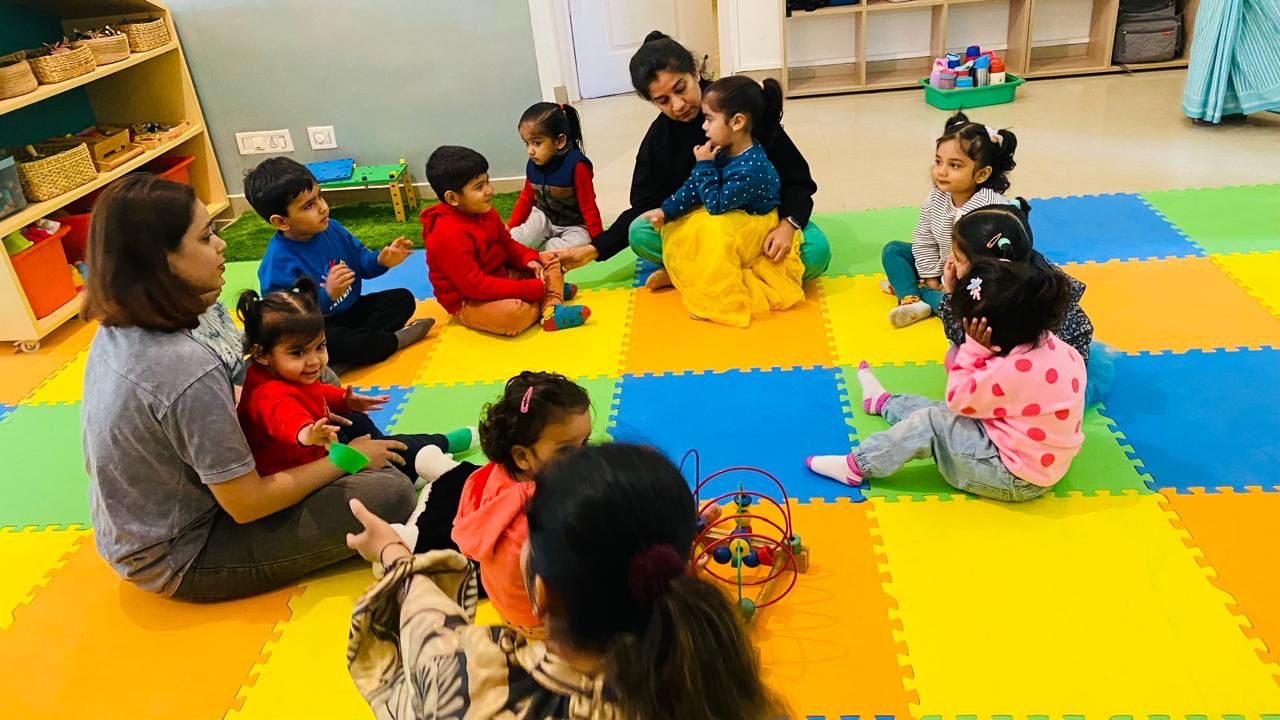
At Tinker Lab, every morning starts not with top-down rules, but with something we call the Rules of Play.
It’s not a conventional circle time where the adult leads and children
follow.
Instead, it’s a shared check-in:
- Did you sleep well?
- Did you eat breakfast?
- How will we play today?
- What should we do if someone doesn’t want to share a toy?
- What happens if something we built is knocked down?
It’s a conversation—crafted together. A moment of mutual care.
A Different Kind of Literacy
Sometimes, soft music plays in the background—Rafi’s Take a Breath, or
Affirmation Song by Soop Doogg.
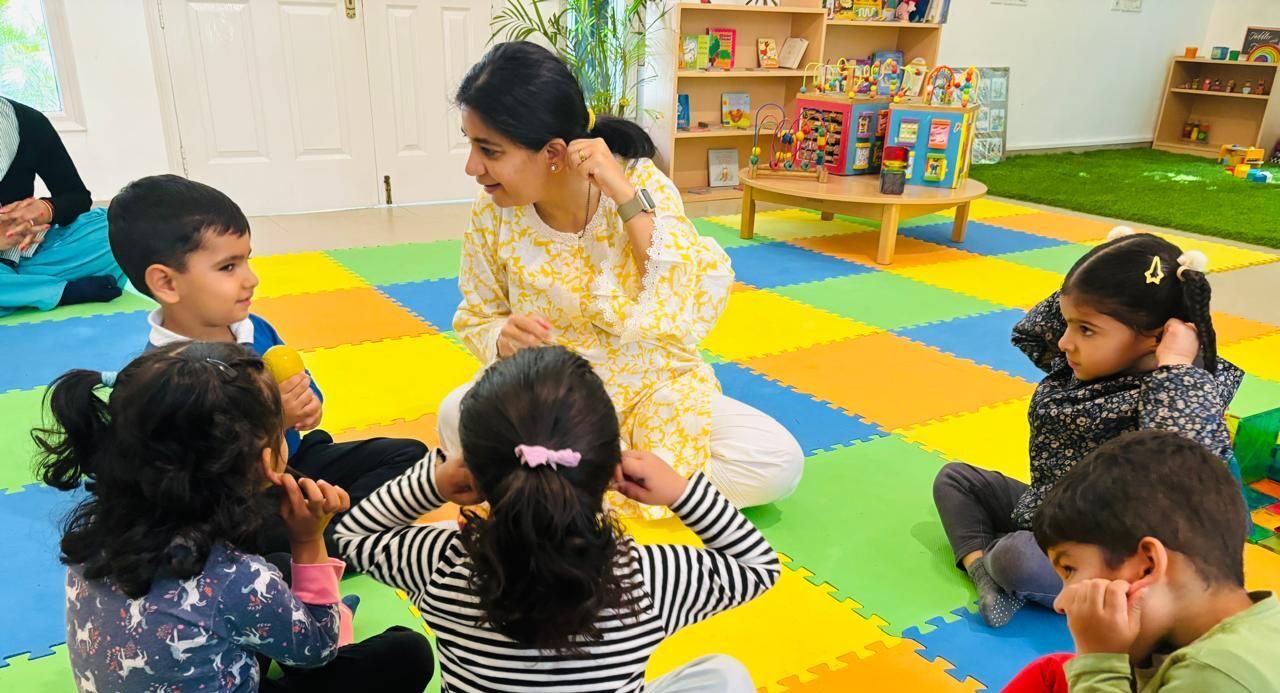
Sometimes, we use a pretend microphone. Not just to practise speaking, but to
practise waiting.
To hold back the words on the tip of our tongues and listen instead.
We read books like
- Isabella and Her 6-Inch Voice
- What Else Can We Do When We Feel Like Hitting
- The Sound of Silence
And we ask:
- “Do you agree with the character?”
- “What else could have happened?”
- “Would you like to suggest a different ending?”
This is more than behaviour management.
This is early political literacy.
This is emotional regulation.
This is citizenship in early childhood.
When Children Co-Create, They Self-Regulate
There are days when I react.
Days when my voice echoes the control I was raised with.
But the children always remind me.
They hold me to the very agreements we made together.
And in that moment—something shifts.
In them.
In me.
In the generational patterns we’re slowly learning to outgrow.
Because when children make the rules, they take responsibility.
When they’re allowed to disagree, they practise reflection.
When they challenge us and we don’t flinch, they learn something powerful:
That authority doesn’t have to fear dissent.
The Real Lessons of Early Childhood Education
I know the seeds are being planted when I hear:
-
“I didn’t like it when you took that. I’m still playing.”
“That didn’t feel fair, Mama.”
Because democracy doesn’t begin with a textbook.
It begins with:
- Voice
- Choice
- Listening
- Patience
At its core, early childhood education is about nurturing citizens—not just
preparing students.
And that work begins now.
For more insights into early childhood education, social-emotional learning, and our work with young children at Tinker Lab – The Nurturant: Instagram | @tinkerlab_nurturant