Who Holds the Mother? Lessons from a Matriarchal Past
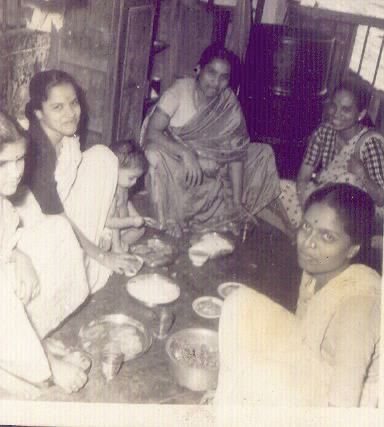
Recently, I returned to my ancestral home in the southern part of India.
A region where matriarchal systems—though now diluted by colonial hangovers and modern property laws—still echo quietly through generations. Where, until my father’s time, children often took their mother’s family name. Where it was natural for the mother’s bloodline, her kutumba, to be carried forward—not as an act of feminism, but because it simply made sense.
Memory as Love
My grandmother and her sisters didn’t wear their power loudly. They just were.
As I sat beside my grandmother’s youngest sister—now in her 80s—trying to piece together our family tree, it struck me:
She remembered every name.
Every daughter. Every daughter’s daughter.
She remembered who they married, what they cooked, and which stories
they told.
It wasn’t data.
It was memory as love.
These matriarchs were not performing motherhood.
They embodied it.
She Was the Village
Visitors came and went.
Some came to eat.
Some to talk.
Some just to sit beside her.
No one left empty.
Because she was the village.
And then, I thought of us—the mothers of today.
Brilliant. Loving.
And burning out quietly.
The Village Is Missing in Modern Parenting
Today’s mothers carry the burden of performing socially desirable parenting while silently collapsing inside. They know too much and feel too alone. And in the absence of a village, they carry the entire village in their minds:
Every meal.
Every milestone.
Every emotion.
Every expectation.
We’re told to be gentle, conscious, calm, regulated.
But rarely are we asked—
Who is holding you?
Motherhood Was Once Shared
Our grandmothers never had to name it.
Because they were never alone in it.
They had people to talk to.
Not a WhatsApp group.
Not a podcast.
Actual people.
Someone to cry with.
Someone to touch.
Someone to share the weight.
They didn’t mother with manuals.
They didn’t gentle parent with Instagram quotes.
They didn’t worry about “positive language” or “screen-free routines.”
They just mothered—with their whole, messy, human selves.
And they did it together.
They mothered livestock, land, children, and community with the same hands.
They did it in saris, bent over fields and firewood.
And somehow, they never made us feel like we were a burden.
What They Took With Them
When both my grandmothers passed, I couldn’t name it then—but something left with them.
The paddy fields withered.
The fruit orchards no longer bloomed the same
way.
The kitchen stopped feeling alive.
The house began to grieve too.
Rebuilding the Village
To the grandmothers, mothers, and aunts who are still here—
Thank you for showing us what it means to lead without a podium.
And to all who are raising children today, may we one day be remembered not for how perfectly we parented, but for how deeply we showed up.
Even if we had to build the village ourselves.
Why This Matters in Early Childhood Education
When we speak of early childhood education, we often focus on curriculum, routines, and developmental milestones. But behind every thriving child is an adult who feels seen and supported.
If we want to raise emotionally intelligent, grounded children, we must begin by asking:
Who is holding the mother?
Because the wellbeing of a child is deeply intertwined with the wellbeing of their caregivers.
More reflections on parenting, community, and early childhood education at Tinker Lab – The Nurturant: Instagram | @tinkerlab_nurturant